Sports Massage in Manchester
Targeted soft tissue therapy, delivered by a physiotherapist, not just a generic deep-tissue rubdown. Used strategically around training, competition, and recovery to keep the body resilient.
What is sports massage?
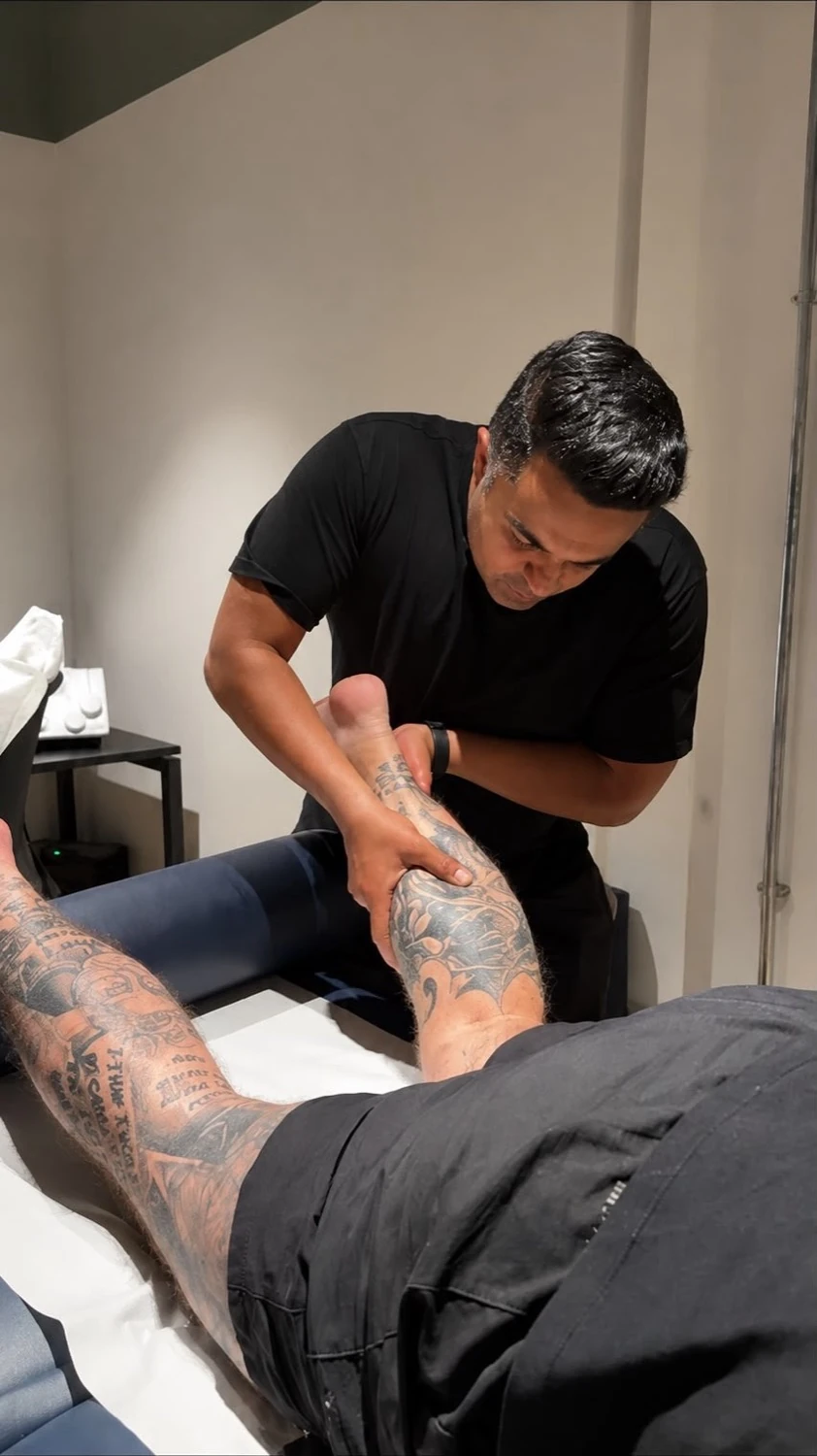
Sports massage is targeted soft tissue therapy used to manage muscle tension, support recovery, and keep the body moving well under training load. It uses techniques like effleurage, deep tissue work, trigger-point release, and stretching. Each session is chosen to match what your body needs that week, not a one-size-fits-all routine.
At Full Motion Physio in Manchester, sports massage is delivered by an HCPC registered physiotherapist rather than a general massage therapist. That matters because each session is informed by clinical understanding of muscle, joint, and nervous-system function. It is recovery work with a diagnostic eye behind it.
Who sports massage is for
Athletes & competitors
Pre-event preparation, post-event recovery, and maintenance work through heavy training blocks.
Runners
Managing the calf, ITB, and lower-limb tightness that builds up through higher-mileage training.
Strength & gym-trained
Releasing the short, tight muscles common in weight-trained populations under repeated loading.
Active desk workers
Easing the long-standing neck, shoulder, and upper-back tension that comes with desk posture.
Anyone under training load
Keeping cumulative tension in check so small niggles do not turn into injuries.
What sports massage helps with
Muscle tension and tightness that builds up under training load.
Recovery between training sessions, events, and heavy blocks.
Delayed-onset muscle soreness (DOMS) after hard efforts.
Specific tightness such as ITB syndrome, calf tightness, or upper-trap tension.
Recurring niggles, caught before they turn into injuries.
Keeping the body moving well so training stays consistent.
The techniques used
Effleurage & petrissage
Foundational sweeping and kneading strokes used to warm tissue, increase circulation, and prepare the area for deeper work.
Deep tissue work
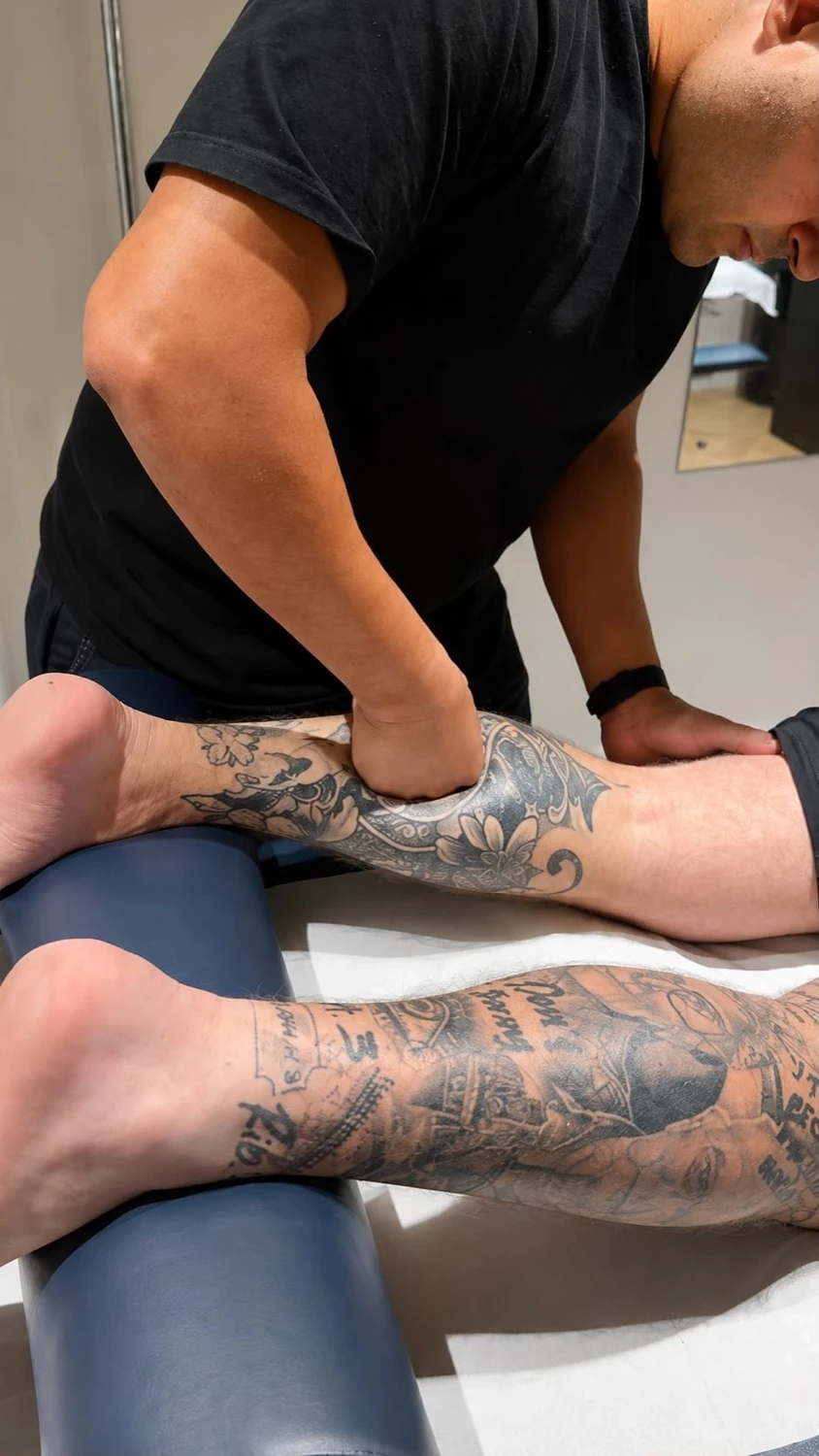
Slow, sustained pressure into deeper muscle layers to address chronic tension and tissue tightness, particularly useful for athletes and desk workers with long-standing patterns.
Trigger-point release
Direct, sustained pressure on hyperirritable points within muscle to help release referred pain patterns, often used for shoulder tension, headaches, and persistent muscle knots as part of a wider treatment approach.
Soft tissue release (STR)
Active technique combining a passive lock on the muscle with an active stretch by the patient, particularly effective for short, tight muscles common in runners and weight-trained populations.
Myofascial release
Slow, sustained work into the connective-tissue layer surrounding muscle. Useful for chronic restriction and postural patterns.
What to expect in a session
Brief check-in
A quick review of what has been going on, your training load, any niggles, and your goals.
Treatment
Soft tissue work delivered firmly but within your tolerance, matched to what your body needs that week.
Honest feedback
Straight clinical context on what we are finding, whether tissue is tight, normal, irritable, or worth assessing further.
Self-care
Simple strategies, mobility, foam rolling, and hydration, to support the work between sessions.
When to use it
- Pre-event: a short, brisk session 24-48 hours before competition to prepare tissue without leaving you sore.
- Post-event: gentler, flushing-style work to support recovery and reduce delayed-onset muscle soreness.
- Maintenance: regular sessions (for example every 2-4 weeks) to manage cumulative training load and prevent niggles becoming injuries.
- Treatment: alongside physiotherapy for specific issues like ITB syndrome, calf tightness, or upper-trap tension.
Why a physiotherapist delivers it
A physiotherapist's sports massage is informed by clinical assessment. If something feels off during the session, an irritable tendon, a joint that does not move well, or a muscle imbalance, it gets identified, and you get straight clinical context rather than just a referral. You are not left guessing whether your tightness is just tension or the start of an injury.
Sports Massage FAQs
Related services
Train Hard, Recover Smart
Book sports massage with an HCPC registered physiotherapist in Manchester's Northern Quarter.
Book an Appointment