Exercise Rehabilitation in Manchester
The strength side of recovery, delivered properly. Progressive, gym-based rehabilitation using elite-level equipment on site to take you from early recovery to a full return to sport, work, or life.
What is exercise rehabilitation?
Exercise rehabilitation is the structured, progressive use of movement and strength training to recover from an injury or surgery. A physiotherapist prescribes specific exercises that are loaded, progressed, and supervised over weeks or months. The goal is to rebuild the strength, control, and capacity that the injury has taken away.
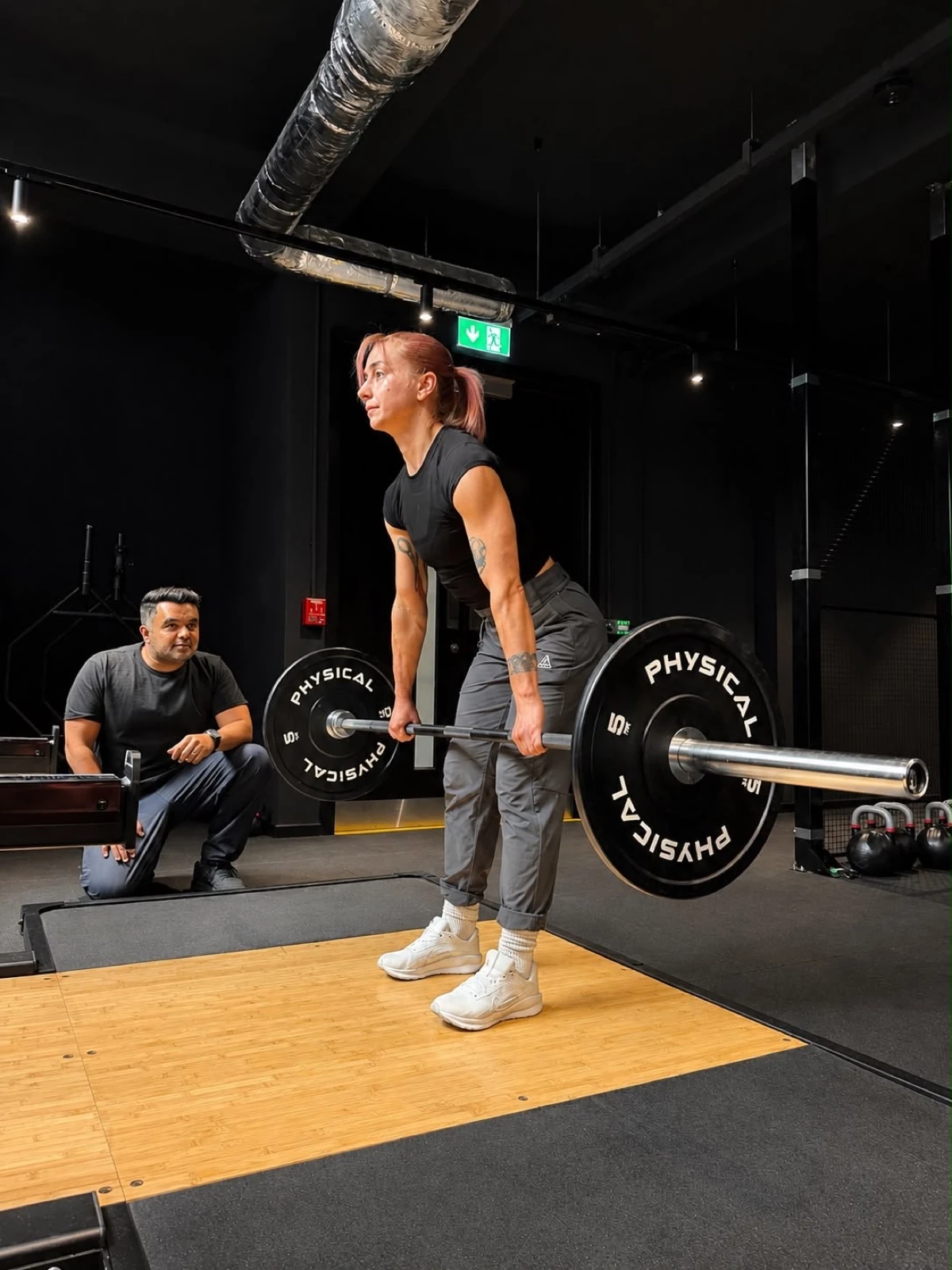
At Full Motion Physio in Manchester, exercise rehabilitation sits at the centre of recovery, not as an afterthought. The clinic has direct access to elite-level gym equipment on site, so the exercises you are prescribed can be loaded properly, progressed week by week, and built up to whatever your body actually needs to handle. Most injuries do not fully recover without this side of the work.
Who benefits from exercise rehabilitation
Post-surgical
Recovering from surgery such as ACL reconstruction, knee or hip replacement, or rotator cuff repair.
Athletes returning from injury
Needing objective, progressive strength work to get back to sport safely.
Persistent or recurring pain
Pain that has not resolved with passive treatment alone and needs loading to settle for good.
Building resilience
Anyone wanting the physical robustness to stay injury-free in the long term.
What exercise rehabilitation helps with
Rebuilding the strength an injury or surgery has taken away.
Restoring movement quality and control.
Building tissue tolerance so the area can handle real load again.
A safe, progressive return to sport, work, or daily life.
Reducing the risk of the injury coming back.
Recovering fully after surgery, not just back to baseline.
The phases of exercise rehabilitation
Phase 1, Restore
Early-stage work focuses on activating the right muscles, restoring movement quality, and tolerating gentle load. This often includes isometric holds, low-load isolation exercises, and pain-modulating movements.
Phase 2, Rebuild
Once basic capacity is back, the focus shifts to building strength symmetry and tissue tolerance through progressive resistance training: leg press, hamstring curls, split squats, rows, presses, hip and core work, programmed around your specific injury and goals.
Phase 3, Reload
Power, speed, and reactive strength. Plyometric progressions, velocity-based training, and sport-specific movement patterns are introduced when foundational strength is in place.
Phase 4, Return
Sport-specific or activity-specific reintegration. Cutting, decelerating, jumping, contact, lifting, whatever your activity demands, rehearsed under load and fatigue before return.

How your programme works
Individualised programme
Built around your specific condition, goals, training history, and the time you have available, evidence-based and progressive.
Loaded properly
Exercises loaded using professional-grade equipment on site, not limited to what fits inside a treatment room.
Supervised or self-directed
Sessions can be supervised one-to-one, or delivered as a programme to follow with regular check-ins.
Progressed week by week
Load and difficulty are adjusted as you improve, so the programme keeps moving you forward toward full capacity.
What sets this apart
Most physio clinics give you a sheet of band exercises and a hope. We use a fully-equipped gym environment with professional-grade strength and conditioning kit, so progression is not limited by what fits in a treatment room. The exercises you are prescribed can be loaded, supervised, and progressed in the same place, immediately.
Equipment available on site
- Olympic barbells, racks, and bumper plates.
- Cable machines and selectorised resistance equipment.
- Dumbbells across a full weight range.
- Plyometric and conditioning kit (boxes, sleds, bands).
- Cardio equipment for graded conditioning.
Exercise Rehabilitation FAQs
Rebuild Your Strength
Start gym-based exercise rehabilitation with an HCPC registered physiotherapist in Manchester's Northern Quarter.
Book an Appointment