Manual Therapy in Manchester
Skilled, targeted hands-on treatment to reduce pain, restore movement, and support recovery, used as part of a wider rehabilitation plan, not as a stand-alone fix.
What is manual therapy?
Manual therapy is the hands-on side of physiotherapy. It covers a group of techniques including joint mobilisation, soft tissue release, myofascial release, neural mobilisation, and trigger-point work. A physiotherapist uses these to reduce pain, free up stiff joints, and prepare your body to move properly again.
At Full Motion Physio in Manchester, manual therapy is delivered as part of a wider treatment plan, never on its own. Hands-on treatment is very good at settling pain and unlocking movement quickly. The lasting recovery, the reason your problem does not come back, comes from the exercise programme that runs alongside it.
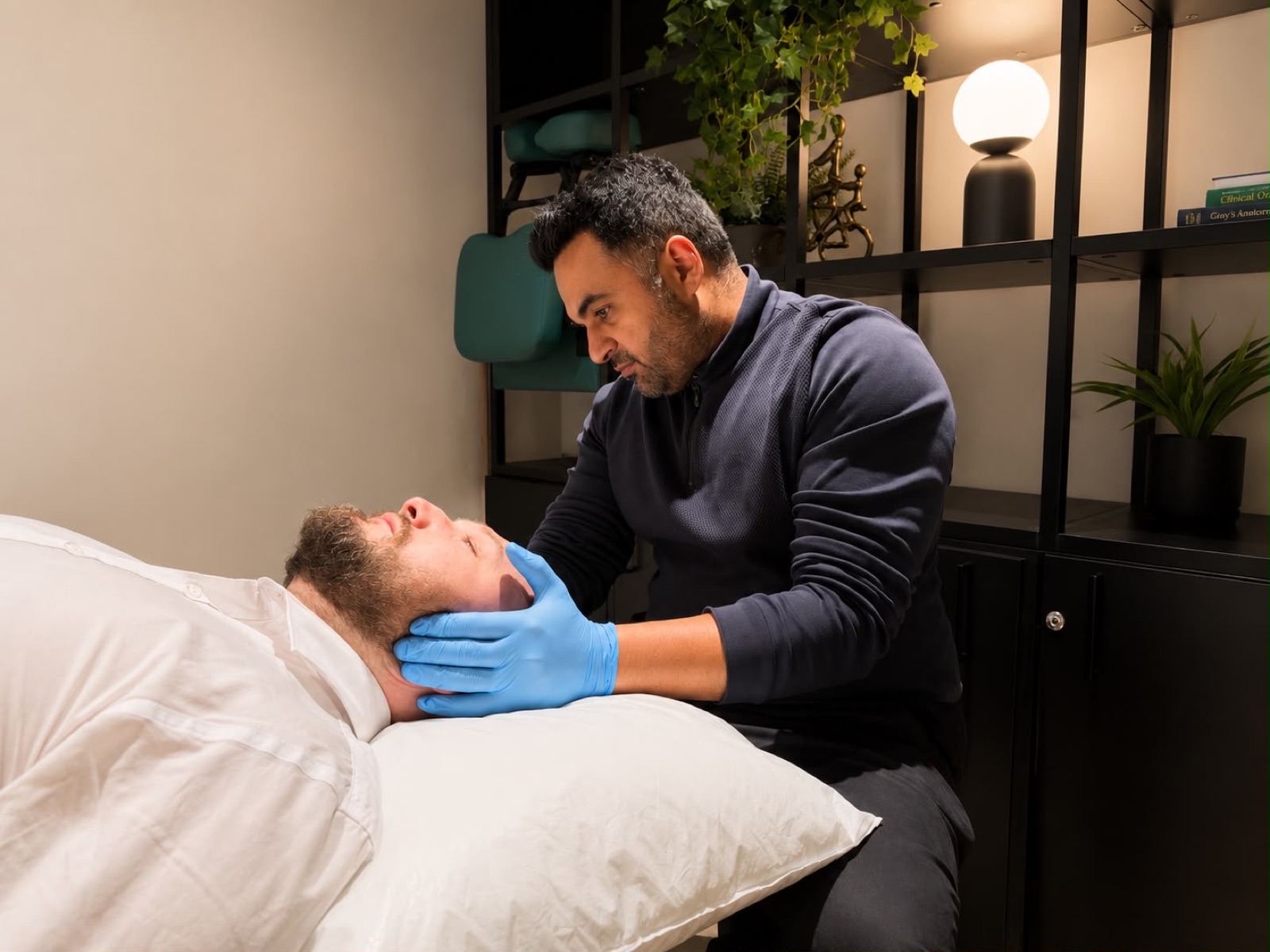
Who manual therapy is for
Recent or persistent pain
People with a painful, stiff joint or muscle that is limiting how they move day to day.
Post-injury
Recovering from a sprain, strain, or flare-up and needing to restore movement before loading it again.
Post-surgical
Working on scar tissue and joint mobility as part of a structured post-operative rehabilitation plan.
Desk and postural strain
Long-standing neck, shoulder, and back tension built up through desk posture and sustained positions.
Stubborn stiffness
Restrictions that have not shifted with stretching or rest alone and need skilled hands-on input.
Common conditions treated with manual therapy
Lower back pain and sciatica.
Neck pain, headaches, and whiplash-type symptoms.
Shoulder impingement and stiffness (including frozen shoulder).
Hip pain and restricted mobility.
Ankle stiffness post-sprain.
Post-surgical scar and joint mobility work.
The techniques used
Joint mobilisations
Graded, controlled movements applied to a stiff or painful joint to restore its normal range of motion. Clinical guidelines support joint mobilisation for the spine, shoulder, hip, ankle, and small joints of the hand and foot, particularly when combined with exercise.
Soft tissue release & deep massage
Targeted work on muscles, tendons, and fascia, addressing trigger points, adhesions, and tight or sensitised tissue. Used to reduce local pain, improve flexibility, and prepare the body for active rehabilitation.
Myofascial release
Slow, sustained pressure applied to restrictive fascia and connective-tissue layers, particularly useful in chronic muscle tension and postural pain.
Neural mobilisation
Specific gliding techniques used when nerve tissue itself is implicated in symptoms, such as in radiating arm or leg pain.
Trigger-point therapy
Direct pressure on hyperirritable spots within muscle to help reduce referred pain patterns, often used alongside other techniques for headaches, shoulder pain, and chronic muscular tension.
What to expect in a session
Clear explanation
A plain account of what each technique is doing and why, before any hands-on work begins.
Hands-on treatment
Treatment delivered within your comfort range, never aggressive or rushed, and adjusted to how you respond.
Re-assessment
Movement and symptoms are re-checked during and after treatment to confirm a real change has been made.
Take-home plan
A simple plan so the gains made on the table are reinforced with the right exercises between sessions.
Part of a wider plan
Modern evidence is clear that manual therapy works best as part of a rehabilitation plan, not the whole plan. Hands-on treatment can rapidly reduce pain and restore movement, but long-term recovery and prevention of recurrence come from progressive loading and strength work. At Full Motion Physio, manual therapy is always paired with a structured exercise programme.
Delivered with care
Treatment is never forced through pain. Techniques are screened for suitability, chosen to match your problem, and adjusted to how you respond, with re-assessment along the way to confirm genuine change rather than a fleeting effect.
Manual Therapy FAQs
Related services
Ready to Move Better?
Book hands-on manual therapy with an HCPC registered physiotherapist in Manchester's Northern Quarter.
Book an Appointment