Post-Surgical Rehabilitation

Expert physiotherapy following orthopaedic surgery. Structured, evidence-based rehabilitation after hip and knee replacement, ACL reconstruction, meniscus repair, shoulder labrum or rotator cuff repair, Achilles tendon repair, and ankle ligament surgery.

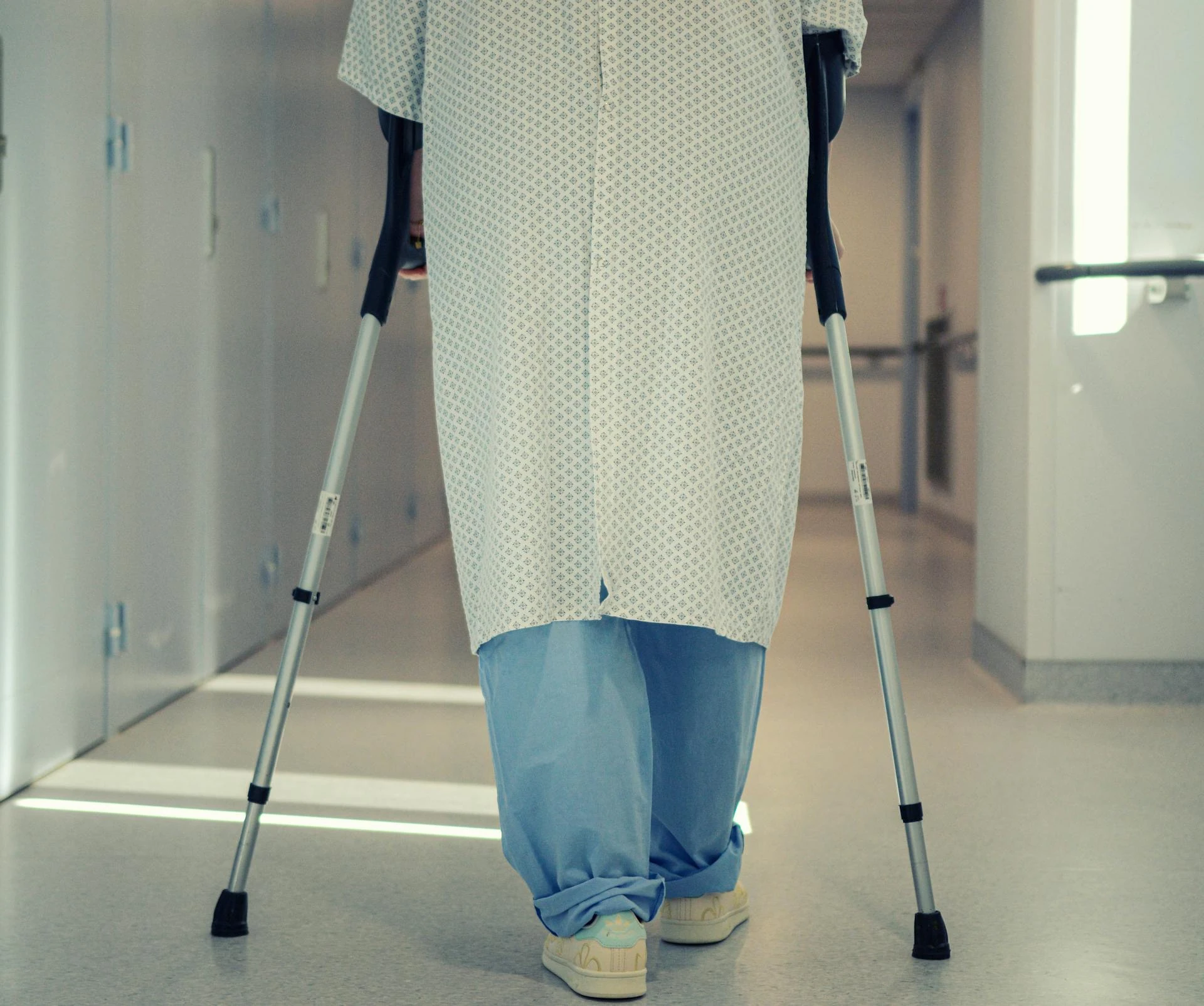
Patient walking with crutches during post-surgical rehabilitation

Surgeries We Rehabilitate

Post-Surgical Rehabilitation in Manchester

Post-surgical physiotherapy is not one-size-fits-all. Each programme is tailored to the specific surgical procedure, your individual goals, and the healing timeline set by your surgeon.

Hip replacement rehabilitation

A total hip replacement is one of the most common and most successful orthopaedic surgeries performed in the UK. The hardware does its job. What determines how well you walk, how far you can travel, and how confident you feel six months later is the quality of the rehabilitation that follows.

How physiotherapy helps

Treatment after hip replacement is staged carefully around tissue healing. The first six weeks focus on protecting the surgical site, controlling swelling, regaining basic mobility, and rebuilding the simple movements that get you safely in and out of a chair, on and off the toilet, and up and down stairs. Walking pattern gets attention here too. Most patients arrive with years of compensations built into how they walk because of pre-surgical hip pain, and those don't disappear automatically once the joint is fixed.

From around six weeks onwards, the focus shifts to rebuilding the strength that's been lost in the hip abductors (the muscles on the side of the hip), the hip extensors (glutes), and the surrounding trunk and leg muscles. Underlying strength is what determines how well you'll function long term, not just how the surgery went.

What recovery looks like

Most patients walk independently with one stick at around four to six weeks, drive again between six and twelve weeks (depending on the side operated on and the surgeon's advice), and return to most leisure activities by three to six months. Getting back to demanding activities like racquet sports, hiking, or golf typically takes the full six months and a structured strength programme. Recovery is not linear. Good days and bad days are normal.

Rehabilitation Phases

  • 1Weeks 1–6: Early protection and mobility
  • 2Weeks 6–12: Strength and function
  • 3Weeks 12+: Full return to activity

Knee replacement rehabilitation

Knee replacement surgery has a reputation for being harder going than hip replacement, particularly in the first few weeks. That's largely because the knee is more swelling-prone, more sensitive to load, and harder to keep moving freely after the operation. Done well, rehabilitation is what gets you past that hump and into the strong, mobile, low-pain knee the surgery was meant to deliver.

How physiotherapy helps

The first job after knee replacement is regaining full extension (getting the knee to straighten fully) and a functional range of flexion (bending). Failure to get extension back early is one of the most common reasons patients are dissatisfied with their knee replacement years later. Treatment focuses on swelling control, soft tissue work to free up the joint, and a daily mobility programme to push range of movement in both directions.

Strength work starts gently from the beginning. The quadriceps muscle is profoundly affected by knee surgery, and rebuilding it is a slow, deliberate process that runs throughout the whole rehab programme. Gait retraining matters too. Patients often arrive with months or years of limping built into how they walk, and that pattern needs to be unlearned alongside the strength work.

What recovery looks like

Most patients walk independently with a stick by four to six weeks, drive again at six to twelve weeks, and return to most everyday activities by three months. Continued improvement in strength, swelling, and confidence happens for up to twelve months. The first three months are usually the most demanding emotionally and physically. Patients who stick with the programme through that period reliably go on to good outcomes.

Rehabilitation Phases

  • 1Weeks 1–4: Swelling control and early mobility
  • 2Weeks 4–12: Strengthening and gait
  • 3Months 3–6: Return to full function

Rotator cuff repair rehabilitation

Rotator cuff repair rehabilitation is dictated by tissue healing biology. The surgical repair needs time to heal before any meaningful load can be put through it, and rushing that timeline is one of the most common reasons a repair fails. Programmes that respect the healing phases reliably produce strong, functional shoulders.

How physiotherapy helps

The first six weeks are about protection. The arm is in a sling, the repair is healing, and the goal is to maintain passive movement, prevent stiffness, and keep the surrounding tissues healthy without loading the repair itself. Early movement of the elbow, wrist, and hand is essential to prevent stiffness elsewhere.

From six to twelve weeks, the focus shifts to active movement. The sling comes off (depending on the surgeon's protocol) and the patient starts moving the shoulder under their own power, with no resistance yet. From three months onwards, strength work begins. The progression here is gradual and deliberately conservative, because the rotator cuff tendon takes the full six months to reach mature healing strength.

What recovery looks like

Most patients are back to comfortable everyday function by three to four months. Return to overhead work or sport varies depending on the size of the tear and the demands of the activity. Small tears might be back to sport by six months; large tears or revision repairs can take twelve months or more. The two non-negotiables across all timelines are respecting the surgical precautions in the early phases, and following through with the strength work in the later phases.

Rehabilitation Phases

  • 1Weeks 0–6: Protection phase (sling)
  • 2Weeks 6–12: Early mobilisation
  • 3Months 3–6: Strengthening and function

ACL reconstruction rehabilitation

ACL reconstruction is one of the most common orthopaedic procedures in younger, active patients. The graft heals predictably, but full return to cutting and pivoting sport takes nine to twelve months and a structured strength and movement programme. Rushing the timeline is the single biggest predictor of re-injury.

How physiotherapy helps

The first six weeks focus on swelling control, restoring full knee extension, and rebuilding quadriceps strength. Quadriceps activation is profoundly affected by the surgery and is one of the most important things to get right early, because it sets the foundation for everything that follows.

From around three months onwards the work shifts to bilateral and then single-leg strength, with running reintroduced in straight lines first. From four to nine months the programme progresses through plyometrics, change of direction, and sport-specific drills. Return-to-sport testing at nine months gives an objective picture of whether the operated leg is ready to go back to competition.

What recovery looks like

Most patients walk without crutches by two to four weeks, jog in straight lines from three to four months, and return to full training between nine and twelve months. The functional outcome at twelve months reliably correlates with the strength and movement work done between months three and nine, not the surgery itself.

Rehabilitation Phases

  • 1Weeks 1–6: Protection, extension, and quadriceps activation
  • 2Weeks 6–16: Strength and bilateral function
  • 3Months 4–12: Running, plyometrics, return to sport

Meniscus repair rehabilitation

Meniscus repair preserves the meniscus rather than removing it, which protects the long-term health of the knee but requires a more conservative early rehabilitation programme than a meniscectomy. The repair needs time to heal before the knee can be fully loaded, and the timeline is dictated by the location and pattern of the tear.

How physiotherapy helps

The first six weeks focus on protecting the repair. Weight bearing, range of movement, and squatting depth are all restricted in line with your surgeon's protocol. Treatment focuses on swelling control, restoring extension, quadriceps activation, and maintaining hip and ankle strength so the rest of the leg is not deconditioned.

From six to twelve weeks the restrictions ease and strengthening intensifies. From three months onwards the programme shifts to bilateral and single-leg strength, then plyometrics and sport-specific drills for those returning to running or cutting sports.

What recovery looks like

Most patients are back to comfortable everyday walking by four to six weeks, light jogging by three to four months, and full sport between five and six months. Meniscus repair recovery is intentionally slower than a meniscectomy because the long-term knee health it preserves is worth the wait.

Rehabilitation Phases

  • 1Weeks 0–6: Protected weight bearing and range
  • 2Weeks 6–12: Strength and load
  • 3Months 3–6: Return to running and sport

Shoulder labrum repair rehabilitation

Labral repair (commonly SLAP or Bankart repair) restores stability to the shoulder after a tear, but the surgical anchor and the labral tissue need time to heal before the shoulder can be loaded or pushed into end-range positions. Rehabilitation is paced carefully around tissue healing and the demands you eventually want to return to.

How physiotherapy helps

The first six weeks are about protecting the repair while the arm is in a sling. Passive range of movement is maintained within safe limits, and the elbow, wrist, and hand are kept moving to prevent stiffness elsewhere. From six to twelve weeks the sling comes off and active movement begins, with end-range and overhead positions still restricted.

From three months onwards strength work starts, and from four to six months sport-specific drills and overhead loading return for those who need them. Throwing athletes and contact-sport players follow extended return-to-sport timelines, with the final return often falling between six and nine months.

What recovery looks like

Most patients regain comfortable everyday function by three to four months. Return to overhead sport, throwing, or contact activities is typically between six and nine months, and longer for high-level throwers. The strength and motor-control work done between four and nine months determines the long-term outcome.

Rehabilitation Phases

  • 1Weeks 0–6: Protection phase (sling)
  • 2Weeks 6–12: Active range of movement
  • 3Months 3–9: Strength and return to sport

Achilles tendon repair rehabilitation

Achilles tendon repair has changed significantly in the last decade. Modern protocols favour earlier weight bearing and structured loading over prolonged immobilisation, because the tendon responds better to controlled load than to extended rest. Rehabilitation runs on a clear timeline anchored to tissue healing.

How physiotherapy helps

The first six to eight weeks are spent in a boot with heel wedges, progressing weight bearing and reducing the wedges in line with your surgeon's protocol. Treatment focuses on swelling control, hip and knee strength, and gentle calf activation within the boot to start preserving the muscle.

From eight to twelve weeks the boot comes off and the work shifts to restoring ankle range of movement and progressively loading the calf complex through isometrics and then heavy slow resistance. From three months onwards loading intensifies, and from four to six months running, hopping, and plyometrics are gradually reintroduced.

What recovery looks like

Walking comfortably without aids typically returns at three to four months. Return to running is usually between four and six months, and return to cutting or jumping sport between nine and twelve months. The single biggest predictor of outcome is the volume and quality of calf strength work done between months three and twelve.

Rehabilitation Phases

  • 1Weeks 0–8: Boot and protected weight bearing
  • 2Weeks 8–16: Range and progressive loading
  • 3Months 4–12: Running and return to sport

Ankle ligament repair rehabilitation

Lateral ankle ligament repair (sometimes called a Broström or Broström-Gould procedure) is performed for chronic ankle instability after recurrent sprains. The repaired ligament needs time to heal under controlled load, and rehabilitation is paced to restore not just stability but the proprioception and strength that prevent the instability returning.

How physiotherapy helps

The first six weeks involve a boot or brace, with progressive weight bearing and a gradual return to a normal shoe. Treatment focuses on swelling control, hip and knee strength, and gentle ankle movement within protected ranges.

From six to twelve weeks ankle range of movement is restored, calf and peroneal strength is rebuilt, and balance and proprioception drills are introduced. From three months onwards the programme progresses to running, jumping, and change-of-direction work, with sport-specific drills layered in over the following months.

What recovery looks like

Most patients walk comfortably in a normal shoe by six to ten weeks, return to running between three and four months, and return to cutting or contact sport between five and seven months. Long-term success depends on the proprioception and strength work being maintained well beyond the formal rehab period, since instability tends to creep back when those qualities fade.

Rehabilitation Phases

  • 1Weeks 0–6: Boot or brace and protected weight bearing
  • 2Weeks 6–12: Range, strength, and balance
  • 3Months 3–7: Running, plyometrics, return to sport

Post-Surgical FAQs

For most orthopaedic surgeries, physiotherapy begins within days of the operation. Your surgeon will advise on the appropriate start time based on the specific procedure. Early physiotherapy is crucial for managing swelling, preventing complications such as deep vein thrombosis, and establishing the foundations of a full recovery.
Yes. A tailored home exercise programme is an essential component of post-surgical rehabilitation. Khuram will provide clear, progressive exercises to complement your clinic sessions, ensuring recovery continues between appointments.
Recovery timelines vary by procedure. Hip and knee replacements typically require 3–6 months of rehabilitation. Rotator cuff repairs may require 6–12 months depending on the size of the tear and the demands of your lifestyle or sport. Khuram will give you an honest, realistic prognosis at your initial assessment.
A referral is not strictly required, but it is helpful. If your surgeon has provided post-operative guidelines or restrictions, please bring these to your first appointment so Khuram can design a programme that respects any surgical precautions.

Recovering From Surgery?

Start your post-surgical rehabilitation with expert physiotherapy in Manchester.

Book an Appointment
Get in Touch