Dry Needling in Manchester
A targeted, evidence-based technique using fine acupuncture-style needles to release myofascial trigger points, modulate pain, and restore movement. Used as part of a wider physiotherapy plan, not as a stand-alone fix.
What is dry needling?
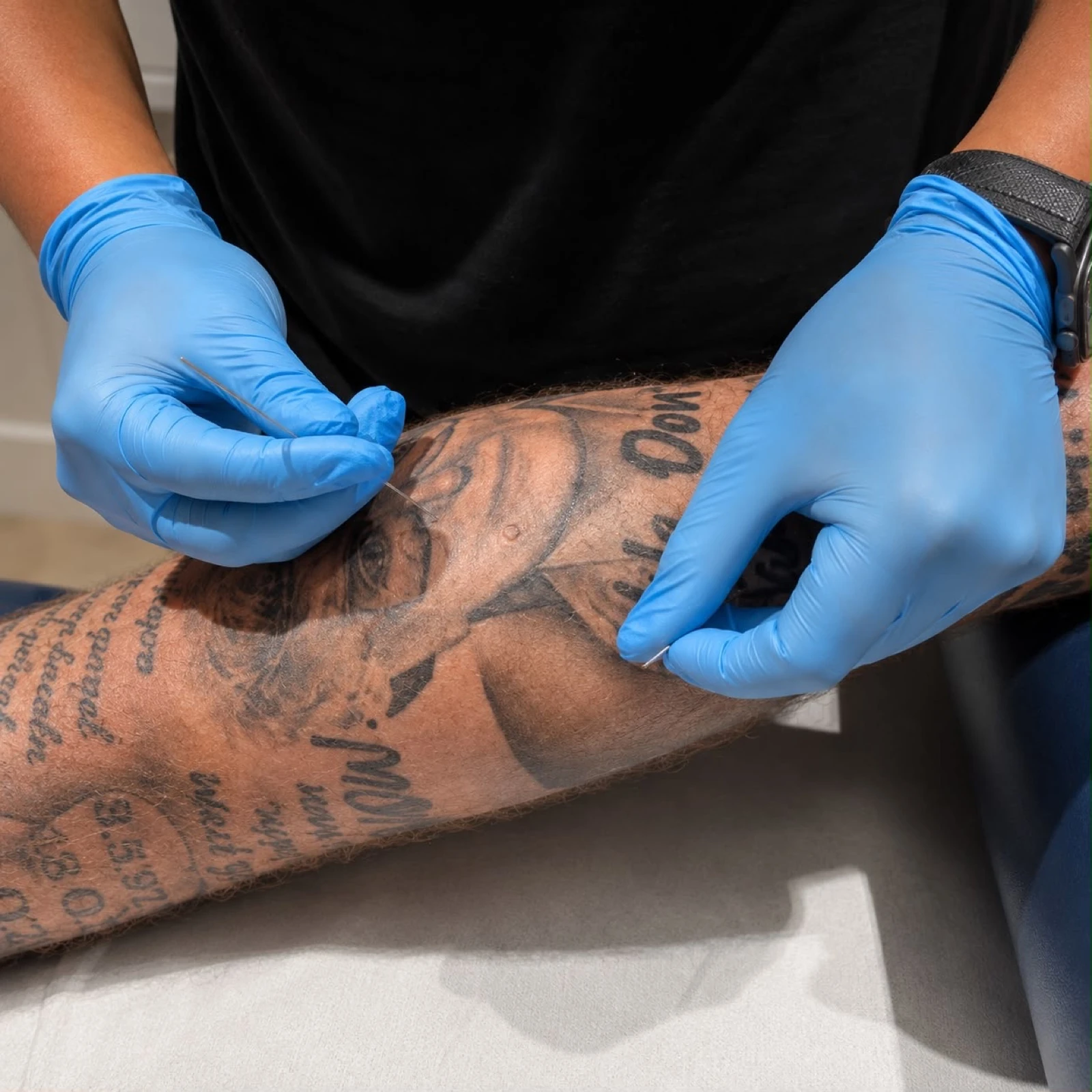
Dry needling is a physiotherapy technique that uses thin, sterile filament needles inserted into a muscle trigger point or tight band of tissue to release tension and reduce pain. Although it uses the same needles as acupuncture, the rationale is entirely different. Dry needling is a Western, neurophysiological treatment targeting specific muscular dysfunction, not energy pathways.
At Full Motion Physio in Manchester, dry needling is used as part of a wider treatment plan, never on its own. It is particularly useful for stubborn trigger points, chronic muscular tension, and tendinopathy cases that have not responded to manual therapy and exercise alone.
Who dry needling is for
Stubborn trigger points
Hyperirritable knots in muscle that keep referring pain and have not settled with other treatment.
Chronic muscular tension
Long-standing tightness that limits movement and keeps coming back.
Tendinopathy
Persistent tendon-related pain being managed as part of a wider rehabilitation plan.
Not responding to other treatment
Problems that have plateaued with manual therapy and exercise alone and need an extra route in.
What the evidence supports
Chronic and acute mechanical neck pain.
Non-specific lower back pain.
Lateral epicondylalgia (tennis elbow).
Subacromial shoulder pain and rotator cuff-related disorders.
Plantar heel pain (including plantar fasciitis).
Myofascial pain syndromes and tension-type headaches.
Hip and gluteal trigger-point pain.
How dry needling works
Local twitch response
When the needle contacts a taut band, it triggers a brief involuntary muscle contraction, which is associated with reduced muscle tone and improved local blood flow.
Pain modulation
Needling activates inhibitory pain pathways at the spinal cord and brainstem, reducing central sensitisation and the perceived intensity of pain.
Local biochemical change
Research has shown reduced concentrations of inflammatory mediators (substance P, CGRP, bradykinin) at the trigger point following needling.
Improved tissue extensibility
Releasing taut bands allows associated joints and adjacent muscles to move through a fuller range with less restriction.
What a dry needling session involves
Assessment
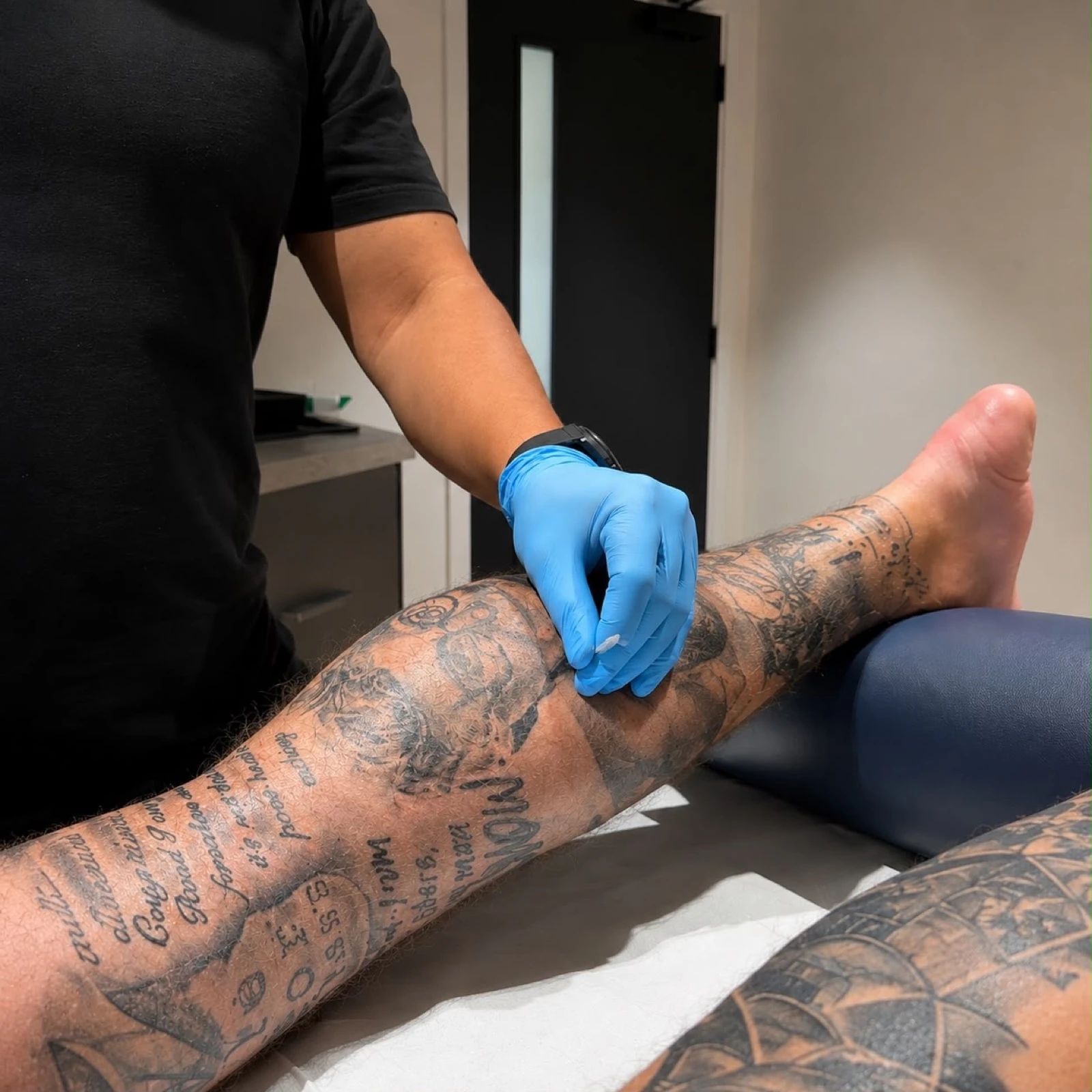
A thorough subjective and objective assessment to identify the relevant trigger points.
Clear explanation
A clear explanation of the technique, the sensations to expect (a brief twitch and post-treatment soreness are normal), and your right to stop at any time.
Sterile needling
Sterile, single-use needles inserted only into the relevant tissue, leaving the surrounding area untouched.
Active follow-up
Needles remain in place for a short period before removal, followed by active rehabilitation, stretching, mobility, and strength work to consolidate the gains made during treatment.
Is it safe?
When delivered by a qualified, post-graduate-trained physiotherapist using sterile, single-use needles, dry needling has a strong safety profile. Serious adverse events are rare. The most common side-effects are mild and short-lived: post-treatment muscle soreness, similar to the soreness after training, and minor bruising at the needle site. Khuram is fully trained in dry needling and uses CSP-aligned safe practice standards.
When dry needling is not used
- A strong needle phobia (we will not push it, there are excellent alternatives).
- Bleeding disorders or anticoagulant therapy (with caution, case-by-case).
- Pregnancy (some areas avoided, case-by-case).
- Active local infection or skin lesion at the proposed needling site.
- Unmanaged needle anxiety where the patient has not consented.
Dry needling is most effective combined with exercise rehabilitation and manual therapy. As a stand-alone treatment its effects are typically short-lived; as part of a wider plan, it can be a powerful tool for breaking through stubborn pain and movement restrictions.
Dry Needling FAQs
Related services
Break Through Stubborn Pain
Book dry needling with an HCPC registered physiotherapist in Manchester's Northern Quarter.
Book an Appointment