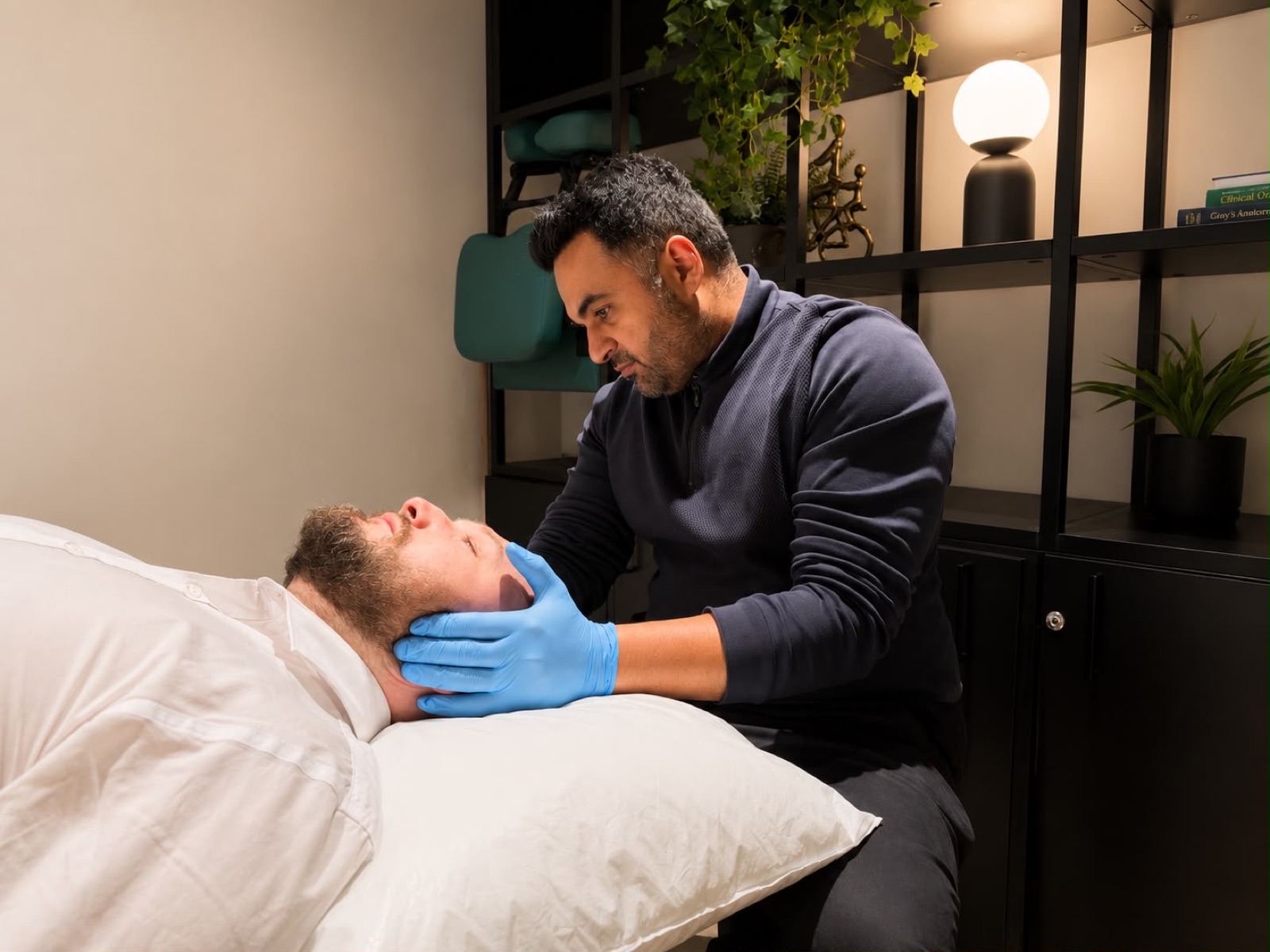
It is a genuinely confusing question, and the honest starting point is that these three professions overlap far more than the internet arguments would suggest. All three are regulated, all three treat aches and pains, and all three have skilled and less skilled practitioners within them. Rather than crown a winner, this guide explains what each one actually is, what the evidence says, and how to make a sensible choice for your situation.
The three, briefly and fairly
Physiotherapy is the broadest of the three. In the United Kingdom, physiotherapists are regulated by the Health and Care Professions Council (HCPC) and work across sports injuries, post-surgical rehabilitation, neurological and respiratory conditions, and everyday musculoskeletal pain. The typical approach is a thorough assessment, hands-on treatment to settle symptoms, and a progressive exercise plan to rebuild strength and function.
Chiropractic focuses largely on the spine and joints, and on diagnosing and treating problems through manual techniques, including spinal manipulation. Chiropractors are regulated in the UK by the General Chiropractic Council (GCC).
Osteopathy takes a whole-body, hands-on approach, working with joints, muscles, and connective tissue, often with the idea that the body functions as a connected unit. Osteopaths are regulated by the General Osteopathic Council (GOsC).
Where they overlap
A great deal. All three assess and treat musculoskeletal pain, all three use hands-on techniques, and in practice a patient with, say, low back pain might receive broadly similar care from a good clinician in any of the three. The lines are far blurrier than the labels imply, and modern practitioners in each profession borrow freely from the others.
Where they tend to differ
The differences are more about emphasis than hard boundaries. Chiropractic has traditionally centred on the spine and on manual adjustment. Osteopathy leans towards whole-body manual treatment. Physiotherapy, while it absolutely includes hands-on work, tends to place more weight on active, exercise-based rehabilitation and on restoring strength and capacity rather than relying on manual treatment alone. None of that is a rule, and you will find plenty of individual practitioners who do not fit the stereotype.
What the evidence actually says
This is where honesty matters. For most common musculoskeletal complaints, and low back pain is the best-studied example, the research does not crown one profession as clearly superior. What the evidence and national guidelines consistently support is a particular approach: staying active, exercise, education, and reassurance, with hands-on treatment as a useful addition rather than the entire plan. A clinician who follows that approach will tend to get good results whatever letters follow their name.
The corollary is worth stating plainly: be cautious of anyone in any of the three professions who offers open-ended courses of passive treatment, frequent adjustments or manipulations with no end point, and never builds your own strength and resilience. Lasting recovery usually comes from becoming more robust, not from repeated visits.
So how should you choose?
Two things matter more than the profession itself. First, match the approach to your problem. If your issue calls for progressive strengthening and a structured return to sport or activity, the exercise-led model that physiotherapy is built around is a natural fit. If you specifically want a manual, hands-on approach, chiropractic or osteopathy may appeal.
Second, and more importantly, judge the individual. A thorough assessment, a clear explanation of what is wrong and why, a plan with a beginning and an end, and a practitioner who works to make you independent rather than reliant on them: those are the markers of quality, and they exist in all three professions. Reviews that describe how someone was actually diagnosed and treated tell you far more than the title on the door.
An honest closing note
A skilled, well-trained practitioner in any of these three professions can genuinely help you. We are physiotherapists, and we believe in the assessment-led, exercise-based model for good, evidence-based reasons, but we would rather you found the right person than simply the right label. If that turns out to be us, our approach at Full Motion Physio is built on exactly the principles above, and you are welcome to get in touch.